- New

onsale

In Stock

In Stock

Out of Stock


In Stock

Available upon request

In Stock
Out of Stock
Out of Stock

Available upon request

Out of Stock
Out of Stock
In Stock

In Stock
Download

Featured Products

Out of Stock
In Stock

In Stock
Out of Stock
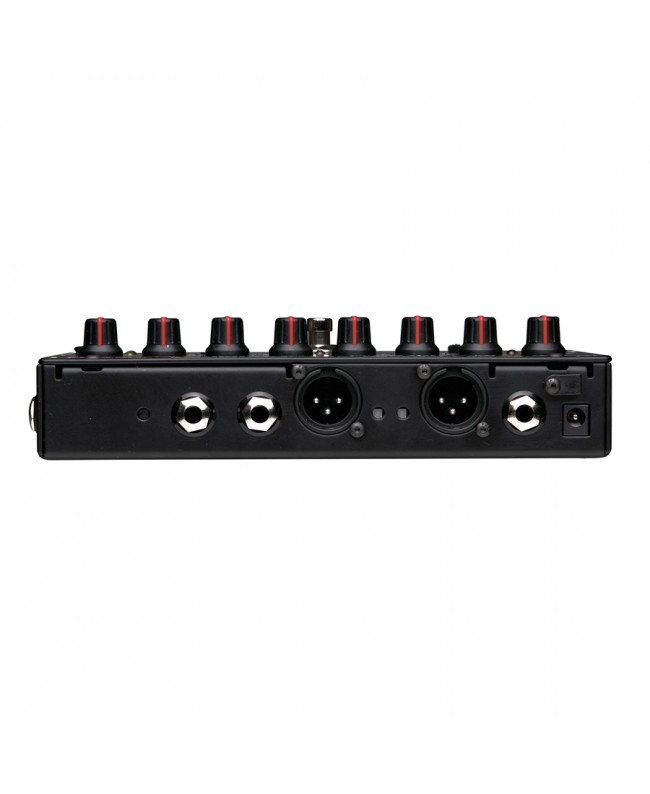
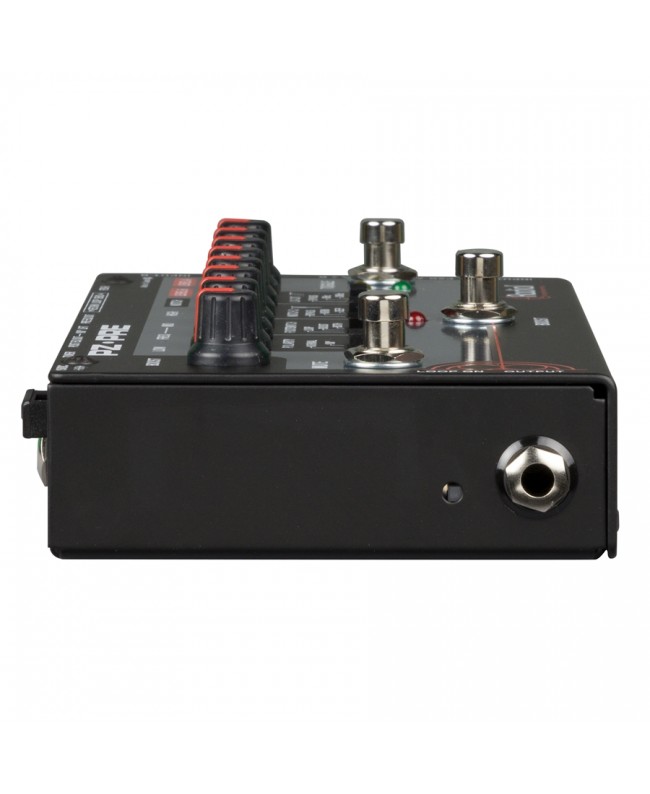
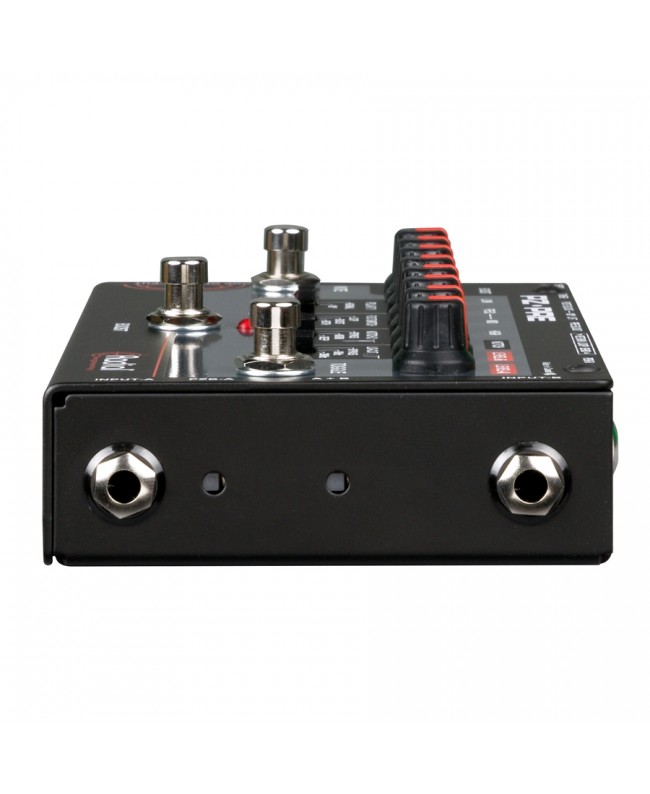
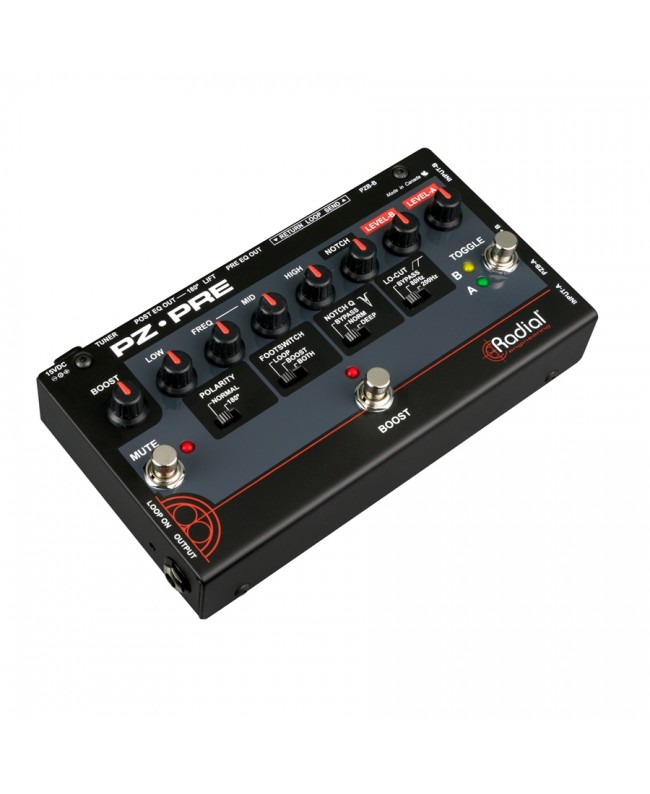
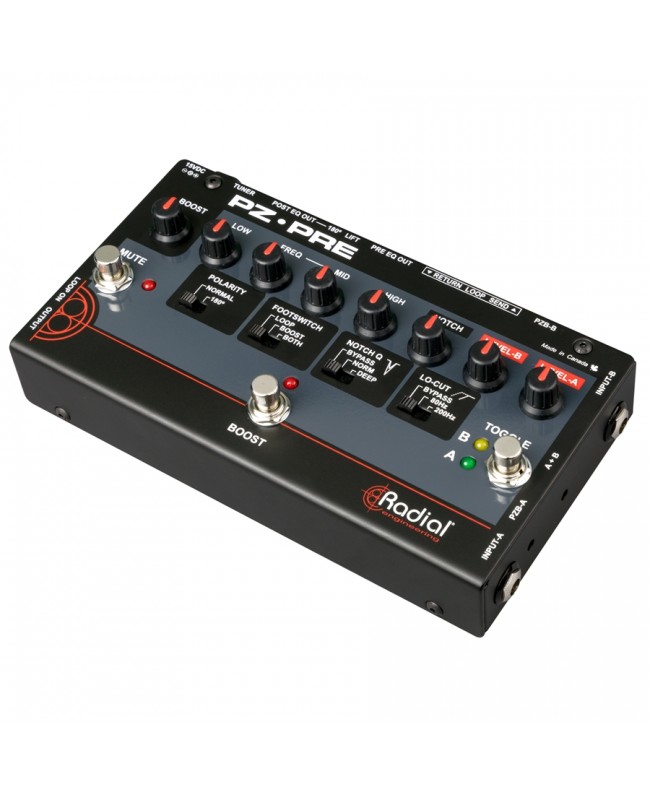
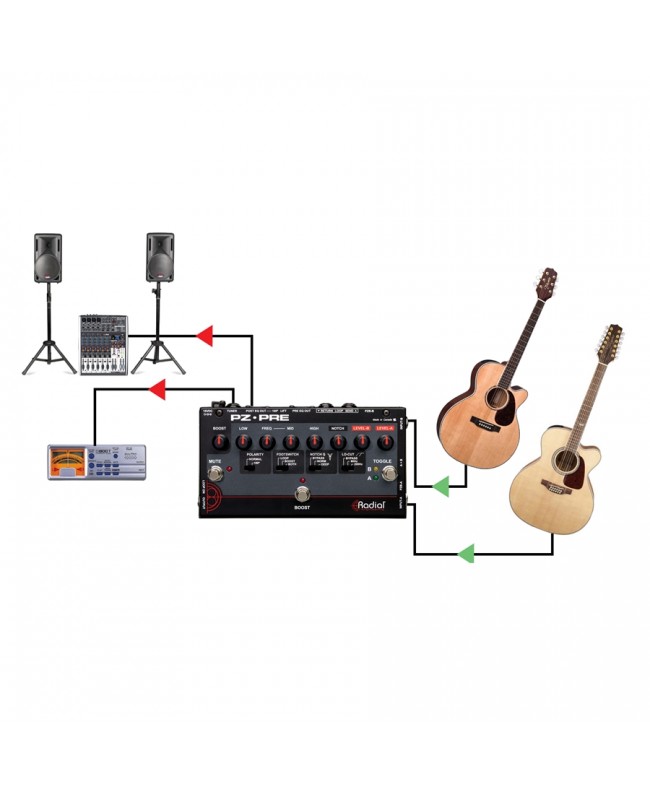
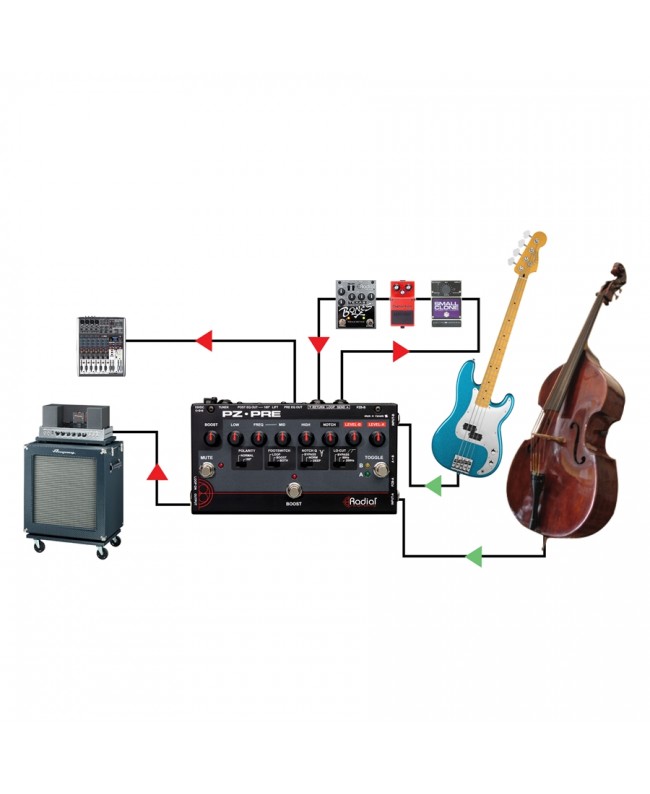
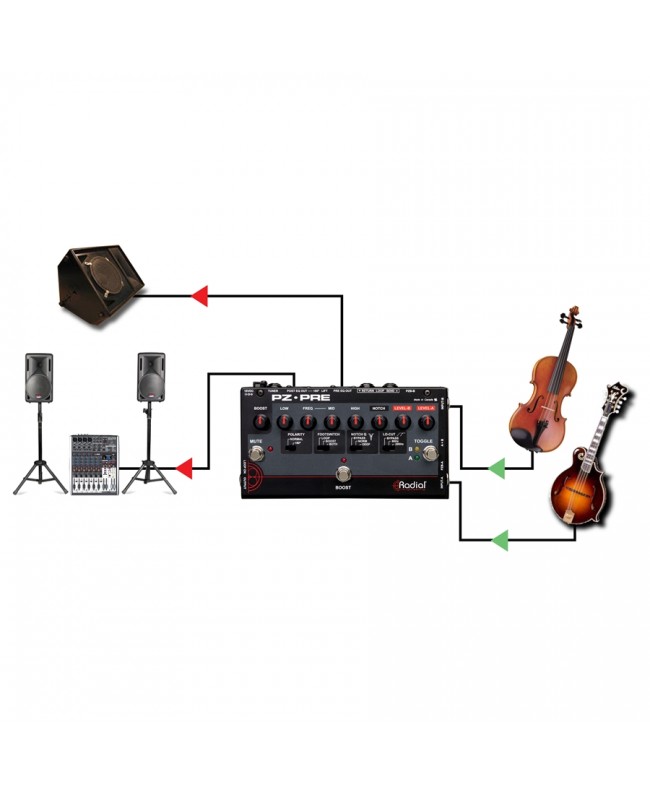

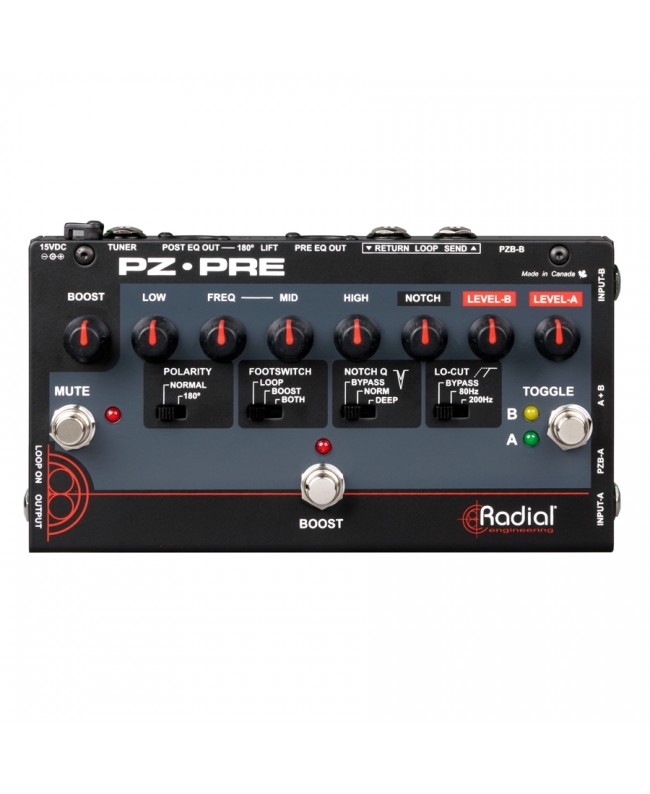
The Radial PZ-Pre is a high-quality acoustic instrument preamplifier with an EQ control section and numerous connectivity options that give you complete control over your rig.
The Radial PZ-Pre is a powerful 2-channel preamplifier for acoustic instruments. High-performance 100% discrete PZB Class A piezo boosters give the preamp all its sonic quality, plus an ultra-quiet pre-amp circuit will adapt to any pickup system. The PZ-Pre has two inputs for quick instrument changes on stage or for mixing two pickups together. A powerful semi-parametric equalizer allows the user to fine-tune their sound by eliminating annoying frequencies. With direct box pre and post EQ outputs, the PZ-Pre can be used to send a dry signal to the desk and a custom sound to the monitors.
While most pedals are designed to do one thing, the PZ-Pre is actually a studio preamplifier that has been placed inside a pedal. Studio preamplifiers can be used on vocals just as they can on instruments. The same is true for the PZ-Pre. It is a clean and natural sounding instrument preamplifier.
Absolutely The PZ-Pre works great on electric guitar or bass guitar and gives you complete control over the signal path. With dual output instruments equipped with magnetic and piezo pickups, you can alternate between piezo in one channel and magnetic in the other.
sure. Just be sure to turn off the PZB boosters since linking one buffer into the other will probably cause background noise and increase distortion.
Yes. You can use effects pedals before or after the PZ-Pre just like any other pedal, or you can use the built-in effects loop.
It depends on the effects processor. Make sure it is designed to accept instrument levels.
It depends. Most power amplifiers are not designed to accept low output sources such as microphones, direct boxes or pedals. They need an extra booster called a preamplifier. However, there are some self-powered active speakers configured with more sensitive inputs.
Professional stages use microphone splitters that allow microphone and direct box signals to be redirected to monitors, the recording system, or the main PA. Having all signals set to the same level makes signal management much easier.
Yes, as long as you have a microphone input on your interface.
The balanced XLR outputs on the PZ-Pre are proprietary active circuits designed specifically to maximize the performance of the PZ-Pre. They are similar to the output stage used on the popular Radial J48 direct box.
No. It will probably only cause distortion.
No. To do so, you must add an external 48V phantom power supply to your system.
No. The PZ-Pre has built-in safety capacitors on the input to protect it from external voltages.
Yes; Cioks DC10 and AC10 both have 15V sockets.
It depends on what you're trying to do: for a simple AB switch, Radial BigShot I/O has two inputs and one of them has a level control to attenuate the signal. If you don't need any control for feedback or tone, this works great. Plug in your acoustic guitar (which usually has the stronger signal) using the channel with the level control so you can turn it down to match your electric guitar. You can also use PZ-Select which allows you to split the signal output to two different amplifiers or to your PA system. Or you can use PZ-Pre which can then give you more EQ options and more DI outputs.
The manual for my piezo electric system suggests an input impedance of 1 megohm. Will the PZ-Pre be OK?
The minimum recommended impedance for piezo pickups is usually 1 megohm, but they sound much better with a higher input impedance. For this very reason, the PZ-Pre has 10 megohms. This produces a softer, richer and more balanced tone.
In the studio, you don't have to worry about feedback or resonance or using a power amplifier for a solo, as these can all be fixed in the mix. Certainly you can use the PZ-Pre to record directly and you will get amazing results...however, many of the features of the PZ-Pre are designed to solve problems on live stages.
Can I use the PZ-Pre with my Sunrise pick up or sunrise buffer box?
Sunrise will work fine and there is no need to use the buffer box.
Does the boost knob merge with the effects loop when the FOOTSWITCH button is assigned to LOOP?
No. The boost knob is simply disabled when you choose to assign FOOTSWITCH to LOOP.
Yes, however, it is important to note that you will reduce the life of the internal voltage regulators from about 20 to 18. Also, be sure to check the polarity of the power supply since most pedal power supplies are negative on the center pin. If this is the case, you will need to use a 2.1 mm barrel connector polarity reversal wire to feed the positive polarity of the center pin to the PZ-Pre. Proceed with caution!
I notice that the 15 V DC power supply supplied with my PZ-PRE may get a little warm when not in use, is this normal?
Yes it is normal.
No. In the latest version of the PZ-Pre there is an effects loop switch that allows the loop to be controlled using the footswitch.
Is the effects loop on the PZ-Pre with respect to the signal path in series or parallel?
The effects loop is in series.
Can I combine a passive magnetic pickup with a piezo and have the PZ-Pre control both?
Yes. Turn on BLEND so that both channels are active at the same time, turn on PZB for the piezo, and then adjust the relative volumes for each pickup to match. You can use two separate guitar cables or a stereo TRS cable to make the connection.
If I use a stereo TRS source to connect to INPUT-1 of PZ-Pre, can I still use INPUT-2?
No. The RING from the TRS jack on INPUT-1 is normalized through INPUT-2, when you connect a connector to INPUT-2 it will interrupt the signal.
Specific References

On sale

In Stock
Out of Stock

Out of Stock
bestseller
In Stock
In Stock
Out of Stock
In Stock

Available upon request
In Stock