- -7%
- New

onsale

In Stock

In Stock

Out of Stock


In Stock

Available upon request

In Stock
Out of Stock
Out of Stock

Available upon request

Out of Stock
Out of Stock
In Stock

In Stock
Download

Featured Products

Out of Stock
In Stock

In Stock
Out of Stock
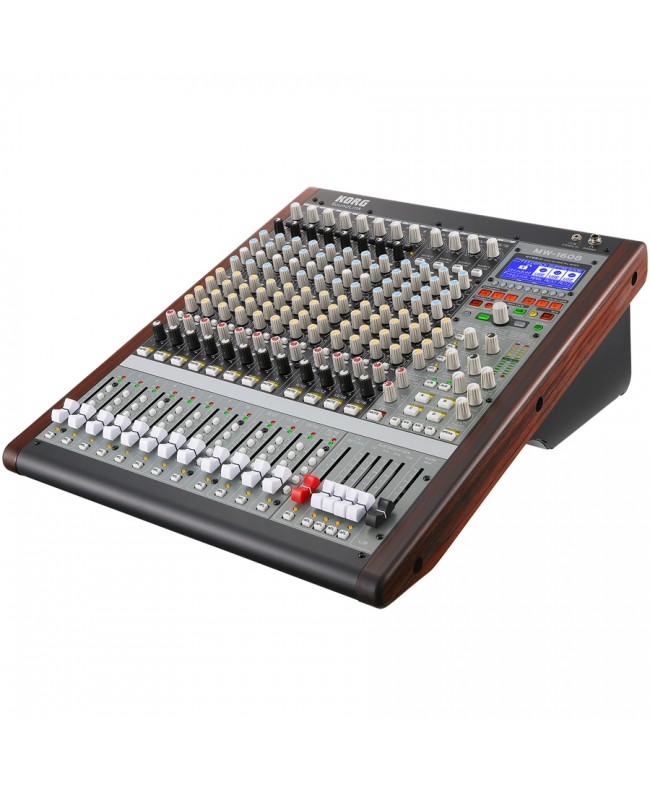
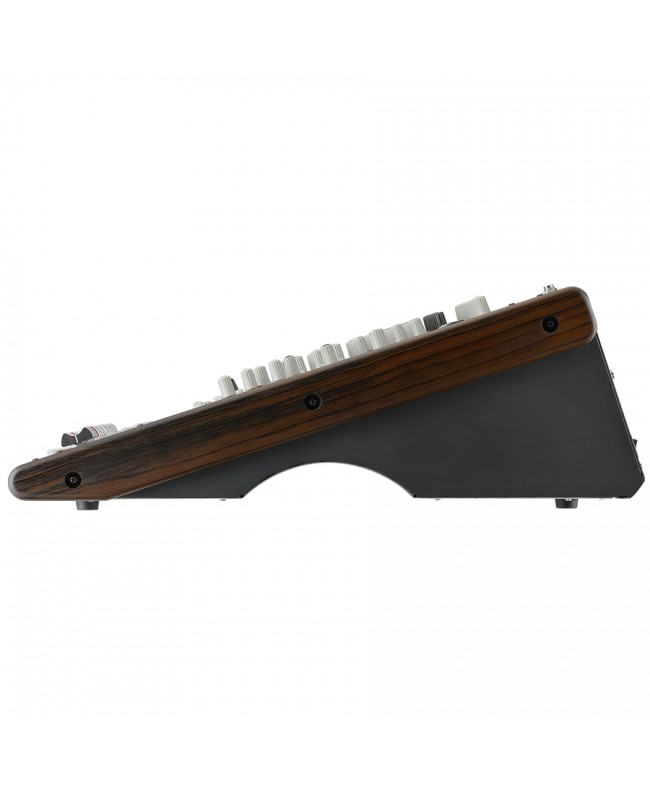
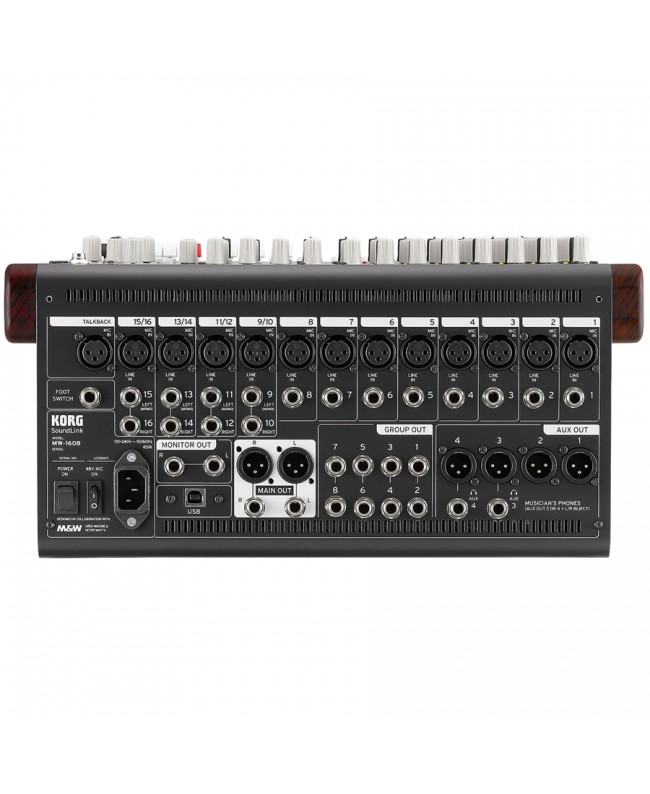

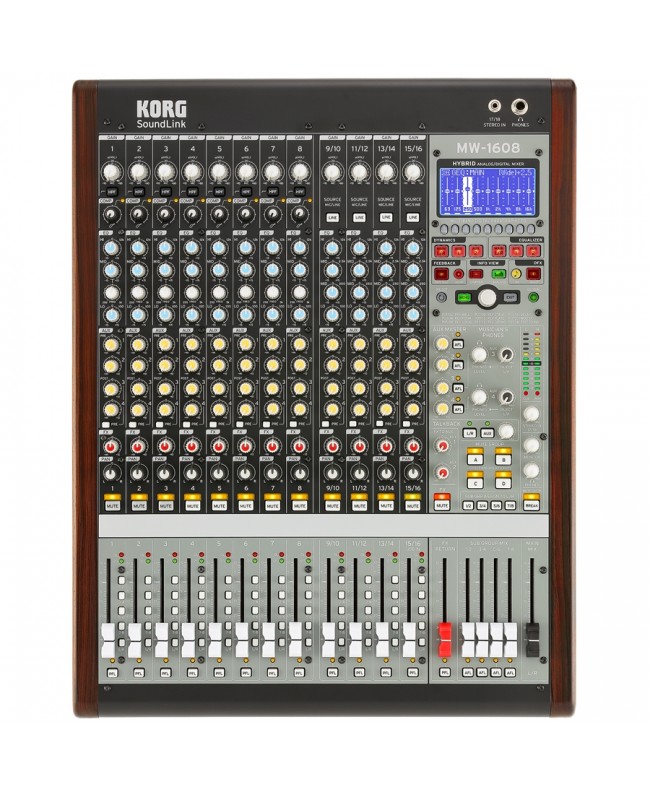
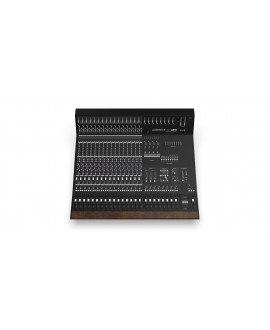
KORG SoundLink MW1608 is a 16-Channel Analog Digital Hybrid Structure Mixer with: 8 Mono channels switchable Mic/Line and 4 Stereo channels also Mic/Line, with a 16 x 8 x 2 structure, precisely on 8 Buses. This Mixer combines the advantages of control offered by the analog interface with the main functions immediately accessible, with the quality and versatility of digital technology, operating features indispensable especially in Live use.
These distinguished individuals did not limit themselves to the theoretical and design phase but also actively used these tools by integrating the operational solutions resulting from this field experience.
KORG MW1608 is the result of a precise design where the high-quality analog circuitry adopted for both components and physical controls is complemented by an advanced 32 Bit Floating Point DSP capable of generating up to 10 different types of processing simultaneously.
KORG MW1608 has newly designed HiVolt microphone preamplifiers with very high headroom, and an internal voltage of 16.5 V, (also on stereo channels). The Channel Strip includes: Gain control with a range from: +10dB to +60dB (Mic), -10 to +40dB (Line), allowing connection and proper interfacing with a wide range of microphone types, including condenser, due to the presence of +48V phantom power. High-quality One Knob Compressor on the 8 microphone channels, simple to use allows a range of corrective or creative interventions on the dynamics of the input signal.
3-band EQ with Sweepable averages on Mono channels: HI (12k, shelv.), MID (Peak, Sweep. from 250hz to 5k) and LO (100 Hz, shelv.), +-15dB Boost/Cut; HP Filter: 12dB/Oct. at 80 Hz. This type of Equalizer, typical of many emblazoned Vintage Mixers, allows capillary intervention on the audio signal thanks to the possibility of shifting the mid-frequency band (250Hz - 5Khz), where those considered critical for the correct perception of sound are often located.
Stereo Channels
The Stereo channels also have the HiVolt Preamplifier with Gain from: +10dB to +60dB (Mic), -10 to +40dB (Line), Micro/Line switch while the channel EQ is 4-band: 100 Hz - 250 Hz - 2.5 Khz - 12 Khz +- 15 dB Boost/Cut, a consonant choice for this type of channel typically used for instruments connected via Line or panoramic microphone shots, which normally require less shaping or correction.
Further on we find 4 aux sends AUX1-2-3-4 of these AUX-3 and 4 are switchable Pre/Post. This increases the possibilities of using this section as needed, since in complex monitoring situations it is possible to use all 4 AUX Send as Monitor lines, or by selecting AUX-3 and 4 PRE, as sends for external multi-effects.
Determines the path of the signal from the input to the output of the mixer, a fundamental control for the correct calibration of the signal is the PFL (Pre-Fade-Listen), that is, listening to the signal before the Fader, The sound engineer in fact once the source is connected to the Mixer, activates the PFL to check with the LEDn METER located on the MONITOR section and the 2 Green and Red LEDs the level of the signal, if too low he increases it appropriately with the GAIN, vice versa if too high he intervenes to attenuate it. Once the input signal is adjusted, the intervention on the SLIDER determines the output signal, that is, how we will hear it in the mix once assigned on MASTER L/R. Assignment to SUBGRUPS 1-8 allows you to control a number of channels with a single SLIDER, which is useful to use on instruments such as drums, or to oppurtunately group choir voices or horns.
This section handles the Master listening levels on the AUX lines with AFL Control, the level for the two Headphone lines, Talkback with assignment and level, general effect sends on the AUXs, MUTE the effects, MUTE GROUP, SUBGRUPLE Assignment, STEREO IN: level of the audio device connected to the USB port, Level in the monitors, level in the headphones, instant BREAK mute of all input channels.We also find the Slider with DFX return with PFL, SUBGRUPLE levels with AFL switch, and MAIN MIX L/R Slider.
The AUX MASTER controls the overall levels of the monitors on the 4 lines independently, the same for the headphones, activates and adjusts the level of the TALKBACK on the L/R-AUX sections; this is very important because it is a direct line of communication of the sound engineer with the stage, then with the musicians for communications or service checks. In certain shows the TALKBACK can be used conveniently for voiceovers or prompters.
Uses a powerful proprietary KORG 32Bit floating-point DSP, which generates up to 10 FX contemporarily and allows up to 6 independent FX to be assigned to the L/R Master, and Aux 1 and 2. This section of the DSP generates two different types of Signal Processing: processing in the dynamics domain with LIMITERS, COMPRESSORS and GATES, and in the frequency domain with PARAGRAPH EQUALIZERS.
It is possible to have different types of dynamics processors simultaneously on the MASTER, AUX 1 and 2, such as:
To set up a live Set Up such as the following:
Limiter on Master - Soft Compression on AUX 1 - Limiter on AUX 2
Or any other combination needed, all effects have parameters that can be changed and accessed immediately. It is possible to save the Custom settings of the dynamics processors on 6 memory locations.
As with the dynamics processors, we can have 2 types of equalizers
Again allocable simultaneously to MASTER-AUX 1-AUX 2 with filter control (bandwidth and gain selection), accessible immediately. Custom EQ. settings can be saved on 6 memory locations. This type of Equalizer is called Paragraphic, because it combines the simplicity of using a graphic equalizer with the possibility of selecting a filter with a wider band (Wide) or more selective band (Narrow) as needed, for greater versatility of corrective intervention.
In addition to dynamics processors and equalizers, MW 1608's DSP provides an effective Feedback Suppressor, which can also be independently assigned to the three sections: MASTER-AUX 1-AUX 2. The Feedback Suppressor is an extremely useful module in those Live situations with numerous active microphone channels, which can be prone to triggering annoying Larsen. This device is made with a particularly intelligent algorithm that acts only when necessary, without signal degradation and without the need for any adjustment; truly simple and straightforward to use.
A digital multieffect with 16 types including ambience, delay, modulation, dosable for each channel via a dedicated SEND DFX send could not be missing on a mixer of this class. For this section, too, each effect has parameters that can be adjusted and accessed immediately; a dedicated TAP button allows manual adjustment of echo repeats. There are 30 memory locations available for Recall of personal settings.
On MW1608 it is possible to store 4 SCENEs with the ON/OFF Status of the channels, these allow smooth switching between settings, without hearing residual noise from open channels with no signal, resulting also in a cleaner overall sound; a truly indispensable function in any Live concert.
Houses some important functions for the overall operation of the Mixer:
Spectrum Analyzer: an important function that shows on the display the signal coming out of the L/R Master, it is also possible by connecting a special measuring microphone (optional), to detect the room response and its possible correction through GEQs. In the past this function was entrusted to very expensive external hardware equipment, just think about the usefulness of having such a module integrated in our MW1608 and being able to activate it according to our needs.
Global Scene: instantly stores and recalls on 10 memory locations, all the settings regarding the digital section of the Mixer: Mute the channels, Mute the FX, Mute Group, Break, Dynamic Processor settings of the GEQ and DFX.
Specific References

On sale

In Stock
Out of Stock

Out of Stock
bestseller
In Stock
In Stock
Out of Stock
In Stock

Available upon request
In Stock