- -17%
- New

onsale

In Stock

In Stock

Out of Stock


In Stock

Available upon request

In Stock
Out of Stock

Out of Stock

Available upon request

Out of Stock
Out of Stock
In Stock

In Stock
Download

Featured Products

Out of Stock
In Stock

In Stock
Out of Stock
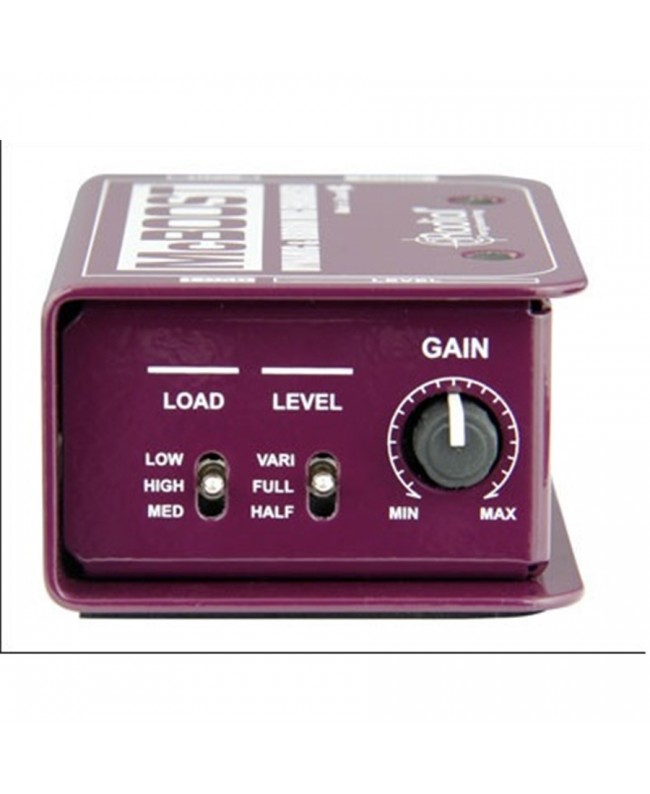
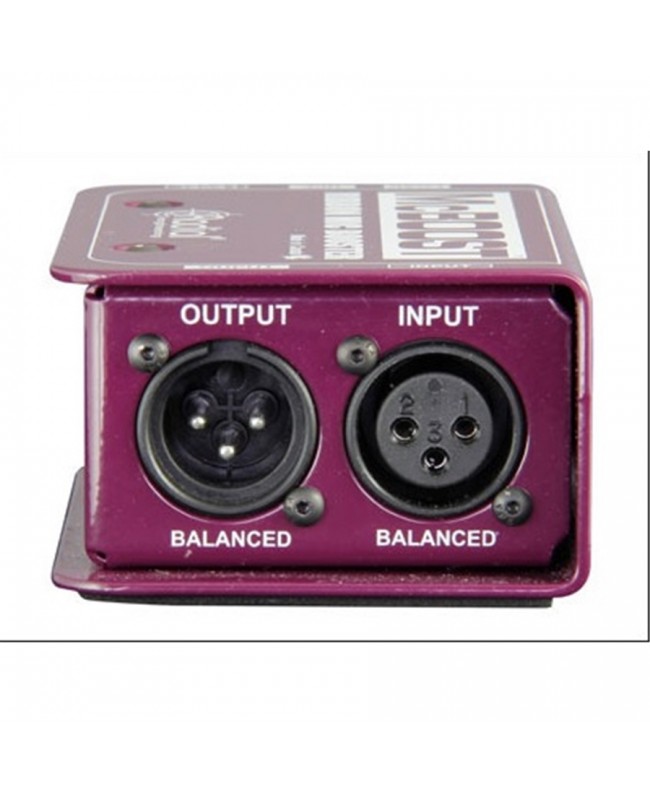

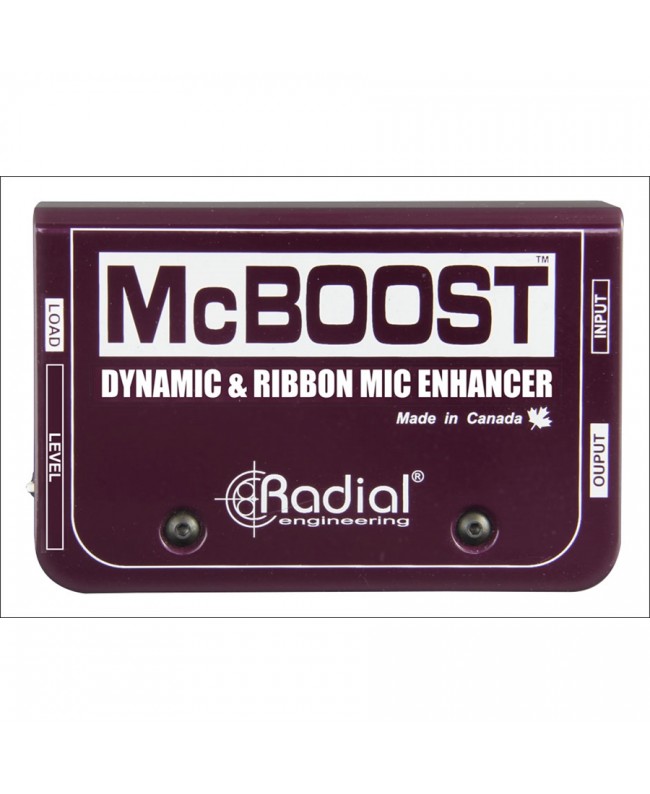
The Radial McBoost is a high-performance microphone signal intensifier designed to elevate the output of a typical dynamic microphone for greater transient response and amplify the signal of a low-power ribbon microphone to a level that can be used with mixers or preamplifiers that cannot provide sufficient gain.
The 100% discrete class A circuit design begins with a dual-transistor J-FET circuit that can provide up to 25dB of gain without introducing noise or color. Each individual transistor was measured and grouped to meet design specifications and achieve certified performance. As in all Radial products, the circuit board is housed within a 14-gauge reinforced steel I-beam chassis capable of preventing external stresses that by creating torsion could cause premature solder separation. The folding cover creates a protective zone on all edges safeguarding switches, potentiometers and connectors from the rigors of touring.
Simply connect the McBoost with standard 3-pin XLR cables and turn on 48V phantom to provide power. Select one of 3 impedance settings to optimize response and then reduce the confusion generated by low frequencies with the 3-position high-pass filter. The McBoost will raise the output level providing more clarity, excitement and extra-drive for use with long cables, whether you are in the recording studio or on a stage for a live concert or broadcast center.
Radial McBoost: Microphone Signal Intensifier
- Signal boost of up to 25dB for dynamic and ribbon microphones
- Extends the dynamic range and range of the microphone
- Uses standard 48V phantom power supply
- Load switch and 3-position high-pass filter
The McBoost is an amplifier specifically designed to boost the signal level of low-output microphones using typical 48-volt phantom power. The magic lies in the unique circuit and the resulting effort to hand-select each part so that the device works within its intended specifications.
Once connected, you will benefit from an incredible amount of gain to push your microphone and have, in addition, the following advantages:
1. Better signal-to-noise ratio
When using long cables, microphones with low output levels are much more sensitive to noise caused by power cables, transformers and dimmers than line signals. Increasing the signal near the microphone improves the signal-to-noise ratio and provides greater clarity.
2. Increased range
Dynamic microphones have less sensitivity than condenser microphones. On the other hand, dynamic microphones have a character that can be very attractive. By boosting the signal without introducing noise you will take your dynamic microphones to a new level.
3. Higher output level
Devices with low output level such as old dynamic and ribbon microphones and even early passive DI boxes do not produce enough level for many preamplifiers and mixers. Signal preamplification allows you to use your equipment with these particular devices.
As soon as you start using the McBoost, you will become addicted to it. Try to control yourself!
Before making connections make sure that all levels are turned down to prevent power-up and connection transients from damaging more sensitive components such as tweeters.
Set the 3-position LOAD switch to the middle 15k position and the 3-position FILTER switch to the upper flat position. This is a good starting point before experimenting with the switches.
Connect your microphone to the input of the McBoost using a standard XLR cable. The McBoost is wired according to AES standards with ground on pole 1, (+) on pole 2 and (-) on pole 3. Connect the output to the mixer or preamplifier with a second cable. The McBoost is powered by the 48-volt phantom power available through the mixer or preamplifier. Turn on the phantom power before turning up the volume. Slowly increase the volume on the input channel as a test. It is a good idea to keep the volume at a low listening level during testing. That way, if a cable is not plugged in correctly, you will not make too much noise when you test the connections.
The McBoost has a 3-position load selection switch that allows you to experiment by changing the input impedance on various microphones to see how they react. Usually, to get as little noise as possible, you set the input impedance to values above the typical impedance of a microphone. Lowering the impedance cuts the bass response. Because there are hundreds of types of microphones, you will not always get the same result. Have fun experimenting.
One of the most practical features on the McBoost is the high-pass filter. This 3-position switch is used to eliminate excessive low-frequency resonance that can muddy the signal and make instruments and vocals harder to mix. Cleaning up the bottom end also improves transient response and reduces distortion.
A high-pass filter is often used on acoustic instruments, because it eliminates the modulation that can occur when mixing these instruments together. You can also use it effectively to decrease the proximity effect that occurs when a vocalist is too close to the microphone. Adjusted to bass, it allows you to get rid of excessive low frequencies that would make the mix muddy. Simply try the various settings to find the one that best suits your microphone and source.
There are so many varieties of microphones that can be connected to the McBoost, so a variable GAIN control has been added to adjust the level to suit the various microphones. The gain range is from +4dB to +25dB for those microphones with lower output levels.
Specific References

On sale

In Stock
Out of Stock

Out of Stock
bestseller
In Stock
In Stock
Out of Stock
In Stock

Available upon request
In Stock